
Dice for Game Stores, Cafés, Clubs and Tournaments
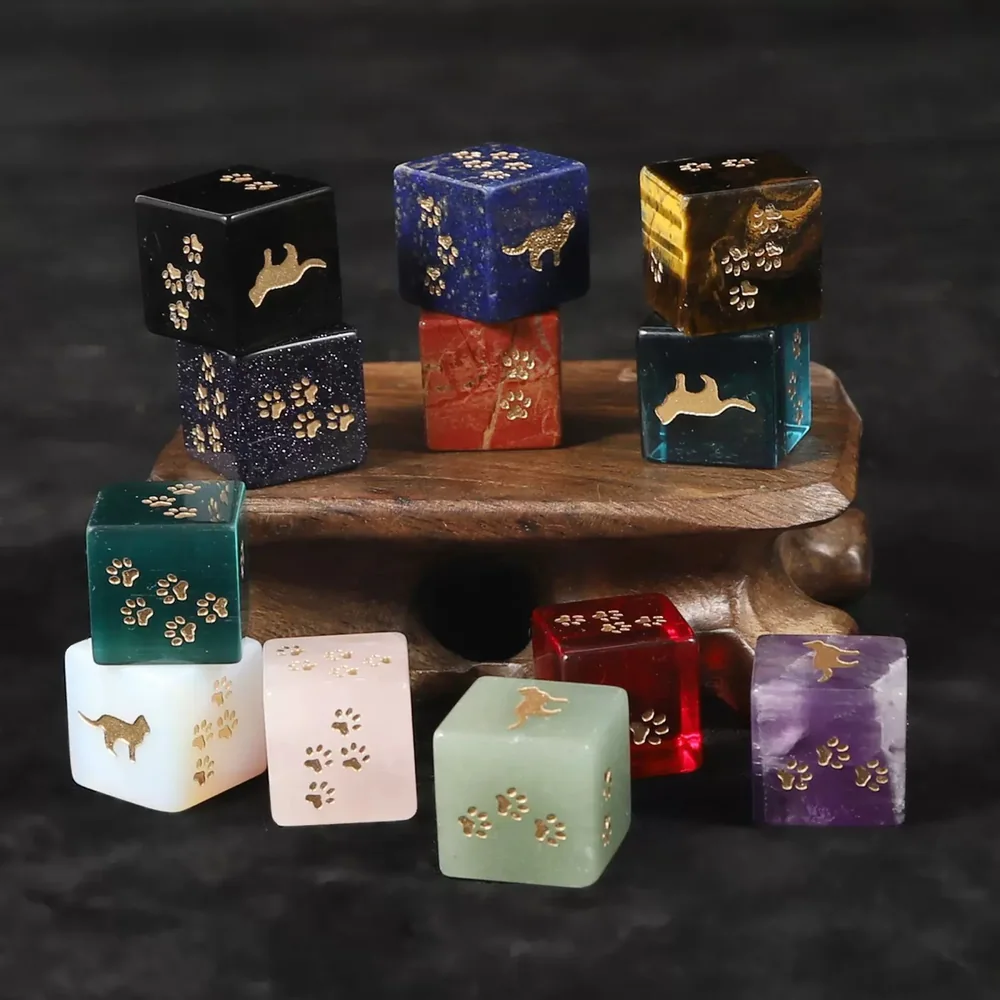
Game venues and organisers buy dice for four distinct purposes: house dice that live on the tables and take heavy abuse, branded club dice sold or given to members, tournament and event prizes where perceived value matters most, and convention exclusives bought in a fixed run against a known date. Each wants a different product — house dice should be cheap, uniform and replaceable, while prizes and exclusives justify premium materials and custom engraving. The practical requirements for venue buying are bulk quantity, easy replacement of losses, and a logo or event mark. Lead time is the constraint that catches organisers out: plan a convention run months ahead.
Almost all dice advice is aimed at individual players. Venues and organisers buy on completely different logic — they are equipping tables, building a brand, or producing a prize — and getting the four use cases straight saves a lot of wasted budget.
House dice: cheap, uniform, replaceable
Dice that live on a café or store table get lost, chipped and pocketed. What matters is that they are consistent, instantly readable, and cheap enough to replace without thought. Buy one design in volume rather than an assortment, so a lost die is replaced rather than breaking up a set, and expect attrition as a running cost rather than a failure. Premium materials are usually the wrong choice here — save them for the products below.
Branded club and store dice
A die with your logo on the highest face is one of the cheapest pieces of merchandise a venue can produce, and one of the few that customers actually use in front of other people. Clubs sell them to members, stores give them with a purchase over a threshold, and both get a small piece of branding circulating in exactly the right community. Replacing the six or the 20 with a logo is the standard approach; a full symbol set is a bigger statement and costs the same to engrave once artwork exists.
Tournament and event prizes
Here the logic inverts: quantity is low, perceived value is everything, and the object needs to look like something a winner keeps. This is where natural stone earns its place — a gemstone set in a presentation box reads as a trophy in a way a plastic set never will, at a fraction of the cost of an actual trophy. Engraving the event name and year turns it into a dated keepsake, which is the whole point of a prize.
Convention exclusives
A fixed run tied to a specific event, usually numbered or marked with the year, sold at the show. These work because scarcity is genuine and the buyer is already in a spending mood. The risks are the mirror image of the reward: order too few and you sell out on day one, order too many and you carry stock to the next event. Most organisers settle on a conservative run with the artwork retained so a second batch is possible, which is a reasonable compromise because the engraving setup is the slow part, not the dice.
What should a venue specify when ordering?
- Quantity and whether you will reorder the same design — it determines whether artwork should be retained.
- Which face carries the logo, or whether you want a full symbol set.
- Die size — 16mm is standard; larger reads better across a busy room.
- Readability first for house and event dice: ink-filled faces with strong contrast.
- Packaging, which matters enormously for prizes and exclusives and not at all for house dice.
Plan the lead time backwards from the event
This is what catches organisers out. Work backwards from the event date and allow for artwork approval, a physical sample, production, and shipping — plus a buffer. Ordering close to a convention means paying for air freight or missing the date entirely, and Chinese New Year can remove several weeks from the calendar if your event falls in the first quarter. The sample round is the step people forget to budget time for, and it is the one you least want to skip on a branded product with a date printed on it.
Ordering
Our minimum is 10 sets for gemstone dice, and venue orders are usually counted in pieces rather than sets, so tell us the piece count and we will quote it that way. Logos and symbols engrave no differently from numbers — send vector artwork and keep the mark simple enough to stay legible at a few millimetres. If you are producing both house dice and a prize tier, it is worth quoting them together: the artwork is shared and only the material and packaging differ.
Frequently asked questions
What dice should a game café buy for its tables?
One design in volume rather than an assortment — cheap, uniform, instantly readable and easy to replace when pieces are lost. Treat attrition as a running cost and save premium materials for merchandise or prizes.
Can I get dice with my store or club logo?
Yes. Replacing the highest face — the six or the 20 — with a logo is the standard approach, and a full symbol set is possible once artwork exists. Supply vector artwork and keep the mark simple enough to read at a few millimetres.
What makes a good tournament prize die?
Perceived value. Low quantity, premium material and presentation packaging, with the event name and year engraved so it becomes a dated keepsake rather than just another set.
How far ahead should I order convention dice?
Work backwards from the event and allow for artwork approval, a physical sample, production, shipping and a buffer. Ordering late means air freight or missing the date, and Chinese New Year can remove weeks from a first-quarter timeline.
What die size works best in a venue?
16mm is the standard. Larger dice read better across a busy room, which matters for house dice on shared tables.
Can I order by piece count rather than sets?
Yes. Venue orders are usually counted in pieces, so tell us the piece count and we will quote it that way. Our minimum is 10 sets for gemstone dice.
Related guides
Have a custom dice project?
Send us your spec sheet — we'll reply with a detailed quote within 24 hours.
Get a Free Quote