
Gemstone Dice for Wargaming and Dice Pools
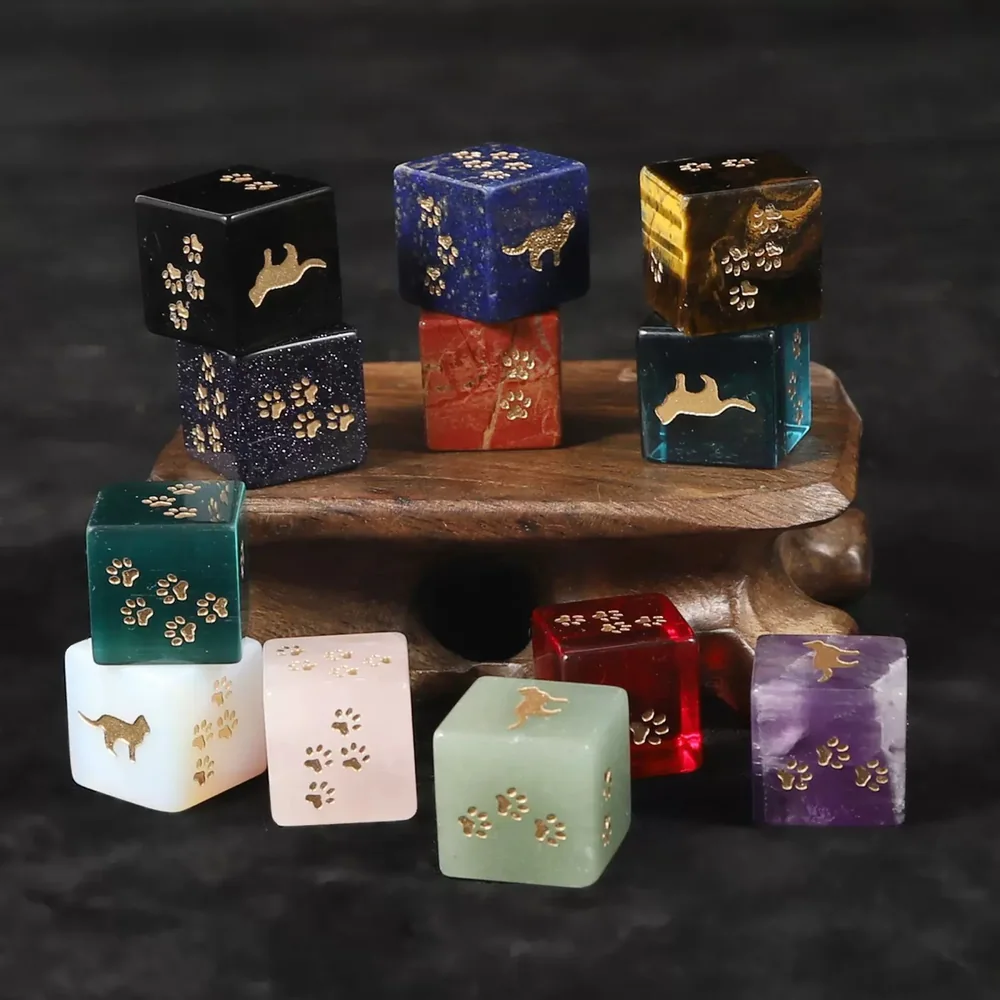
Wargamers and dice pool players roll handfuls of identical six-sided dice, so they buy in matched quantity — typically twenty to forty at once — rather than buying a seven-piece set. What they need from a die is speed and readability: a face that can be read instantly across a table, consistent size so the pile rolls evenly, and dice cut from the same stone batch so the set looks like a set. Gemstone d6 suit this well, and symbols engrave as easily as pips, which makes faction and army-themed dice straightforward. A dice tray is close to essential, because stone dice are heavy and hard surfaces chip them.
Almost everything written about premium dice assumes a roleplayer buying one beautiful polyhedral set. Wargaming works the other way round: one die is useless, and what a player wants is a matched handful that rolls fast and reads clearly. It is a different product, a different order size, and a much better fit for a gemstone d6 line than most sellers realise.
Why quantity matters more than variety
In Warhammer 40,000, Age of Sigmar, Shadowrun and similar systems, a single action can mean rolling ten, twenty or thirty dice at once. Players therefore own large matched groups of one die type and care that they look and behave alike. Where an RPG collector might own eight different sets, a wargamer owns one army’s worth of dice and buys more of the same. That means your order size per customer is larger and repeat purchases are about expanding a matched group, not collecting variety.
What makes a good wargaming die?
- Instant readability — high contrast pips or numerals that can be read across a table without leaning in.
- Consistent size and weight, so a handful rolls evenly rather than one die skidding differently.
- A face size big enough to read quickly; 16mm is the common standard, and some players prefer larger.
- Rounded or lightly chamfered corners, which roll and settle faster than sharp edges.
- Batch consistency — dice cut from the same stone so the group looks intentional rather than assembled.
Sharp edges are the wrong choice here
Sharp-edged dice photograph beautifully and are popular with collectors, but they are a poor fit for pool games. They tumble less predictably, take longer to settle, and their corners are the most fragile part of a stone die — exactly what you do not want when thirty of them are being thrown together thirty times an evening. For wargaming, lightly rounded corners are the practical choice, and they survive far better.
Faction and army symbol engraving
This is where custom dice earn their price in wargaming. Replacing the six face with an army or faction icon is the most common request, and full symbol sets — replacing pips entirely with thematic icons — are increasingly popular. Engraving a symbol is technically no different from engraving a number, so the only real requirements are clean vector artwork and a symbol simple enough to stay legible at a few millimetres. Clubs, tournaments and gaming stores commission these as event dice and prizes, which is a recurring order rather than a one-off.
Are stone dice practical for pool games?
Honestly, with one caveat. Gemstone dice are heavier and harder than plastic, which makes them satisfying to roll and slower to wear — but natural stone can chip if thrown hard onto a bare wooden or stone table, and thirty dice colliding repeatedly is a harder life than one d20 rolling alone. A dice tray solves it completely and most wargamers already use one. If your customers habitually roll on bare tables, say so in your product description and sell a tray alongside; it prevents the only complaint stone dice reliably generate.
Which stones work best in quantity?
Denser, tougher stones hold up better to repeated pool rolling. Tiger eye, obsidian, agate, jasper and aventurine are dependable. Very soft or heavily fractured material is a poorer choice for a die that will be thrown in a handful hundreds of times a night. Colour matters too: pick stones where engraved and ink-filled faces stay high contrast, because a die that reads slowly defeats the purpose in a pool game. Dark stones with gold or white fill read fastest.
How to order matched batches
Tell us the quantity, the die size, the stone, and whether you want pips, numerals or a symbol. Because natural stone varies, matched batches are cut from the same material lot — worth specifying explicitly if visual consistency across the group matters to your customers, which for wargamers it usually does. Our minimum is 10 sets for gemstone dice, and a wargaming order is typically counted in dice rather than sets, so tell us the piece count and we will quote it that way.
Frequently asked questions
How many dice does a wargamer need?
Typically thirty or more matching six-sided dice, because a single unit attacking can mean rolling ten to thirty at once. They buy in matched quantity rather than buying polyhedral sets.
Are sharp-edged dice good for Warhammer?
No. Sharp edges tumble less predictably, settle slowly, and their corners are the most fragile part of a stone die. Lightly rounded corners roll faster and survive far better in pool play.
Can gemstone dice chip during heavy play?
They can if thrown hard onto a bare hard table, especially with many dice colliding. A dice tray prevents it, and most wargamers already use one. Denser stones such as tiger eye, obsidian, agate and jasper hold up best.
Can you engrave faction or army symbols instead of pips?
Yes. A symbol engraves no differently from a number. Supply clean vector artwork and keep the mark simple enough to stay legible at a few millimetres.
What die size is best for wargaming?
16mm is the common standard and reads well across a table. Some players prefer larger for readability; the key requirement is that a face can be read instantly without leaning in.
Can I order matched dice from the same stone batch?
Yes, and it is worth specifying. Natural stone varies, so matched batches are cut from the same material lot to keep the group visually consistent.
Related guides
Have a custom dice project?
Send us your spec sheet — we'll reply with a detailed quote within 24 hours.
Get a Free Quote