
Chinese New Year and Your Production Timeline
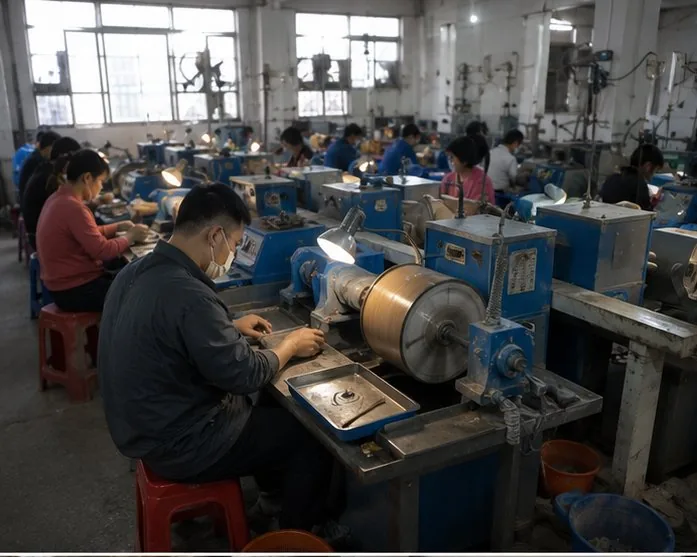
Chinese factories close for Chinese New Year, which falls between late January and mid-February depending on the year. The shutdown itself is one to two weeks, but the practical disruption runs far longer: order books fill from November, workers leave early, factories reopen with reduced staff, and full capacity often returns only two to four weeks after the official holiday ends. Shipping capacity tightens and freight rates rise in the weeks before. To have goods in hand before the holiday, place orders by October or early November. Anything ordered in January will almost certainly ship after the break.
Every year a predictable number of importers are surprised by the same thing: they place an order in January expecting a normal five-week lead time, and the goods arrive in March. Chinese New Year is the largest annual human migration on earth, and it stops manufacturing across the country. Planning around it is straightforward once you know the real shape of the disruption.
When is the shutdown?
Chinese New Year follows the lunar calendar, so the date moves each year, falling somewhere between late January and mid-February. The official public holiday is about a week. Most factories close for longer — typically one to two weeks in total — and the effective disruption stretches well beyond that in both directions. Check the exact date for the year you are planning, because a late-January holiday compresses your December and January far more than a mid-February one.
Why does the disruption last so much longer than the holiday?
- From November, order books fill as every buyer tries to ship before the break — lead times quietly stretch.
- Migrant workers often leave a week or more early to travel home, so output falls before the official close.
- After reopening, factories run short-staffed as workers return gradually; some do not return at all and must be replaced and trained.
- Full capacity typically returns two to four weeks after the holiday officially ends.
When should you place your order?
To have goods in hand before the holiday, work backwards from the holiday date. Allow your production lead time, plus sea freight of roughly three to six weeks depending on destination, plus customs clearance, plus a buffer for the pre-holiday congestion. In practice that means placing orders by October or early November for most destinations. An order placed in December may still make it for a mid-February holiday but leaves no room for a sampling round. An order placed in January will ship after the break.
Does quality change around the holiday?
It can, in two specific windows. In the rush before the close, factories are running at maximum and there is pressure to finish everything — this is when inspection matters most. Immediately after reopening, lines run with new or returning staff who need to get back up to speed. Neither means you should avoid ordering in these windows, but it does mean a third-party inspection is worth more than usual if your order ships in the weeks either side of the holiday.
What about freight?
Sea freight capacity tightens and rates rise in the weeks before the holiday as everyone ships at once, then demand collapses during the shutdown. If your timing is flexible and you are not chasing a retail season, shipping shortly after the holiday often means lower rates and more space. If you must ship pre-holiday, book freight earlier than you normally would.
How to protect your timeline
- Confirm your supplier’s actual closing and reopening dates in writing — they vary by factory.
- Get sampling done early; a sampling round in December rarely fits before the break.
- Consider stock items rather than custom for anything you need across the holiday window.
- Build in a two to four week buffer for post-holiday ramp-up rather than assuming normal lead times resume immediately.
The stock-item option
If you need product across the holiday window and there is no time for a custom run, in-stock designs are the practical answer — they need no tooling wait and ship as soon as they are packed. Pairing a stock product with custom packaging is a common way to get something branded onto a shelf on a short timeline, and it works particularly well in the weeks before a shutdown when production slots are scarce.
Frequently asked questions
When do Chinese factories close for Chinese New Year?
The date follows the lunar calendar and falls between late January and mid-February. The official holiday is about a week; most factories close one to two weeks, with reduced output for weeks either side.
When should I place an order to avoid Chinese New Year delays?
By October or early November for most destinations, allowing production time, three to six weeks of sea freight, customs clearance, and a buffer for pre-holiday congestion.
How long until factories are back to normal after the holiday?
Usually two to four weeks after the official end, because workers return gradually and some must be replaced and trained.
Does product quality suffer around Chinese New Year?
It can in two windows: the pre-holiday rush and the first weeks after reopening with new staff. A third-party inspection is worth more than usual for orders shipping in those periods.
What if I need product during the shutdown?
Order in-stock designs rather than custom runs. They need no tooling wait, and pairing them with custom packaging still gives you a branded product on a short timeline.
Related guides
Have a custom dice project?
Send us your spec sheet — we'll reply with a detailed quote within 24 hours.
Get a Free Quote