
Where Premium Dice Fit in a Board Game Publisher’s Product Line
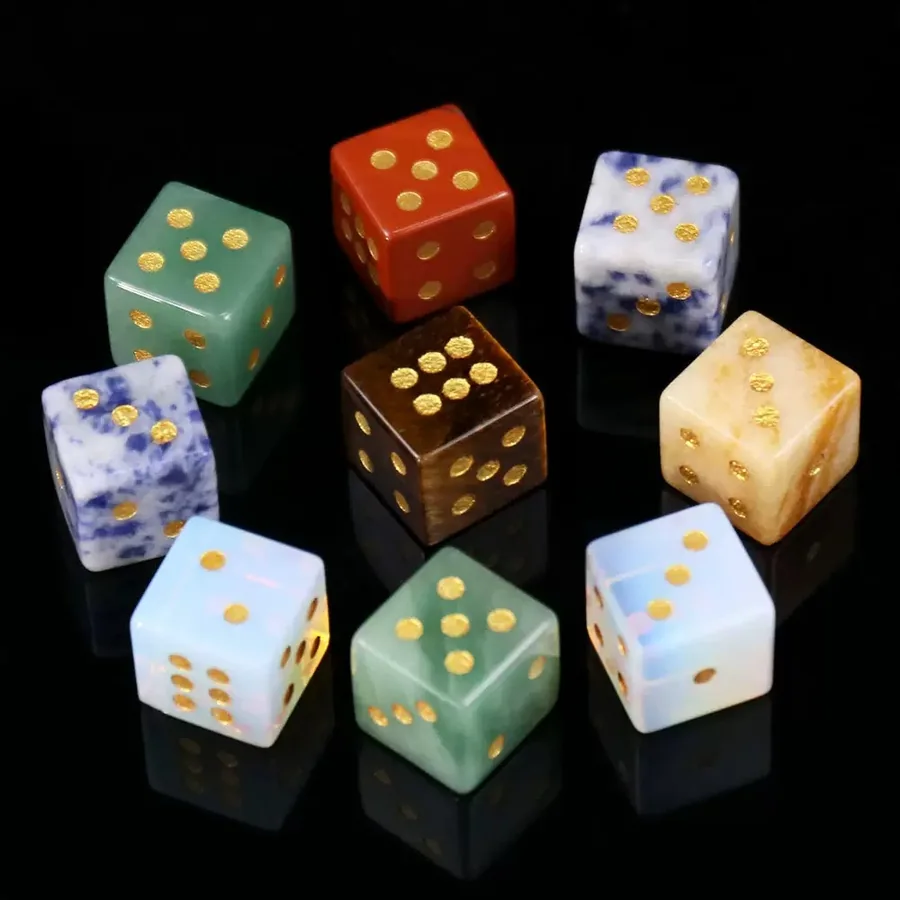
A base game box has a hard component budget, and premium materials rarely survive it — a mainstream boxed game simply cannot absorb stone dice at retail price. Where they do work is every tier above that: the deluxe or collector edition, the Kickstarter add-on, the upgrade pack sold separately, the anniversary reprint and the retailer exclusive. The advantage of those formats is that they are pre-sold or optional, so the publisher carries far less inventory risk than putting an expensive component in every copy. Treat premium dice as a margin product for the customers who already want more, not as an upgrade to the base experience.
Publishers who ask about stone dice usually start from the wrong question: can we put these in the box. Almost always the answer is no, and that is not a pricing problem to negotiate — it is the structure of boxed game economics. The useful question is where in the product line a premium component earns more than it costs, and there are several good answers.
Why the base box rarely works
Retail pricing works backwards from the shelf. A game selling at a mainstream price point has a component budget that must cover the board, the cards, the miniatures or tokens, the insert, the box itself and the printing — and then survive distributor and retailer margin, which together take most of the retail price before the publisher sees anything. Dice are one line in that budget and usually one of the smallest. Upgrading them to natural stone in every copy typically pushes the whole product past its price point, and a game that prices itself out of its category does not sell more because the dice are nicer.
The deluxe or collector edition
This is the natural home. A deluxe edition exists precisely so that the customers willing to pay more can, without forcing everyone else to. Premium dice sit alongside upgraded tokens, a bigger box and better inserts, and because deluxe editions are usually printed in a smaller, known quantity, the component cost is planned against a much higher price. Stone dice are particularly good here because the upgrade is instantly visible and tactile — a customer opening the deluxe box feels the difference immediately, which is not true of thicker cardboard.
Kickstarter add-ons: the lowest-risk format
An add-on is the best structure for an expensive component, because it is sold before it is made. Backers choose to add it, you know the exact quantity before production starts, and you carry no unsold inventory. Compare that with a stretch goal, which commits you to including something in every copy at a cost you may have estimated before you had a real quote. The classic campaign failure is a stretch goal unlocked in week one whose true cost only becomes clear at fulfilment. Premium dice belong on the add-on list, not the stretch goal ladder — or if used as a stretch goal, only when the quote is already signed.
Upgrade packs sold after launch
A separately sold accessory pack for an existing game is an underused format. The audience already owns the game, already knows whether they love it, and is easy to reach through your own channels — so conversion is high and marketing cost is low. It also lets you test demand for a premium tier without touching the core product, and to produce in small runs and reorder rather than committing up front. For a game with a devoted following and a lot of dice rolling, this can become a reliable recurring line.
Anniversary reprints and retailer exclusives
- Anniversary or definitive editions — a reason for existing owners to buy again, which needs visible upgrades rather than rules changes.
- Retailer or distributor exclusives — a differentiated version at a higher price for a single partner.
- Convention editions — small, dated runs sold at the show, where scarcity is real.
- Designer or signed editions — the tier where the object matters more than the game inside.
Which games justify it?
The test is how central dice are to the experience. A game where players roll constantly and hold the dice all evening — dice-chucking Ameritrash, dice-placement games, roll-and-writes — justifies a premium upgrade because the component is the thing people touch most. A heavy euro where a die breaks a rare tie does not. If a customer would not notice the difference an hour into play, the upgrade is spending money where nobody is looking. Be honest about this: publishers who upgrade the wrong component end up with unsold add-ons.
What to plan for in the schedule
Premium components are usually made by a different supplier from the one printing the game, which means two timelines running in parallel and meeting at fulfilment. Build in an artwork approval round and a physical sample before the production run, and remember that a sample crossing continents takes time on its own. If the game is being assembled by a full-service manufacturer, decide early whether the dice ship to them for inclusion or go separately to the fulfilment centre — that single logistical decision has caught out more campaigns than any component cost.
Starting small
Our minimum is 10 sets for gemstone dice, which is deliberately low enough for a publisher to hold a real sample before committing to anything. The sensible sequence is a small sample run to photograph and test at the table, then a quoted quantity once your add-on or deluxe tier has actual numbers behind it. Tell us the game, how many dice per copy and the tier you have in mind, and we will quote it against a realistic run size rather than a guess.
Frequently asked questions
Can we put stone dice in our base game box?
Rarely. A boxed game works backwards from its retail price, and premium dice in every copy usually push the product past its price point. They work far better in a deluxe edition, add-on or upgrade pack.
Should premium dice be a stretch goal or an add-on?
An add-on. It is sold before it is made, so you know the exact quantity and carry no unsold stock. A stretch goal commits you to including it in every copy, often at a cost estimated before you had a real quote.
What is an upgrade pack?
A premium component set sold separately for a game people already own. Conversion is high because the audience is known and reachable, and you can produce in small runs and reorder rather than committing up front.
Which games justify premium dice?
Those where dice are central and handled constantly — dice-chucking games, dice placement, roll-and-writes. A game where a die breaks a rare tie does not justify the spend.
How does this fit our production schedule?
Premium dice usually come from a different supplier than the game printer, so plan two parallel timelines, an artwork approval round, a physical sample, and an early decision on whether dice ship to the assembler or straight to fulfilment.
What is the minimum order for a publisher sample?
Our minimum is 10 sets for gemstone dice, low enough to hold and photograph a real sample before committing to a production quantity.
Related guides
Have a custom dice project?
Send us your spec sheet — we'll reply with a detailed quote within 24 hours.
Get a Free Quote