
How to Tell Real Gemstone from Dyed, Treated or Fake
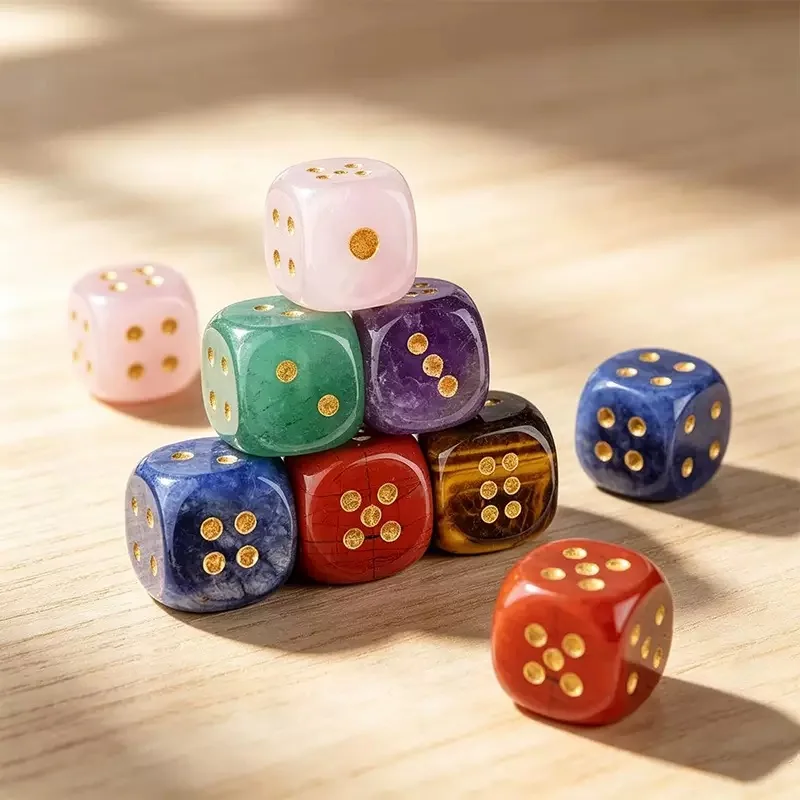
Natural stone is never perfectly uniform: expect colour variation, banding, inclusions and natural flaws. Dyed and imitation material tends to look flawlessly even, shows dye concentrated in cracks and drill holes, and glass gives itself away with round internal bubbles and by warming quickly in the hand while real quartz stays cool. Price is the loudest signal — genuine turquoise or lapis at a price that seems impossible almost certainly is. Many treatments are legitimate and normal; what matters is that your supplier discloses them in writing and that you describe them honestly to customers.
If you sell crystals, beads, or stone products, sooner or later a customer will ask whether a stone is real. The honest answer is often more nuanced than yes or no, because a great deal of the material in the trade is genuine stone that has been treated. Knowing the difference between a normal treatment and a misrepresentation protects both your margin and your reputation.
Check 1: is the colour too perfect?
This is the fastest tell. Natural stone carries variation — a colour gradient, banding, a cloudy patch, a small inclusion. An entire batch of beads in exactly the same saturated tone, with no variation between pieces, is usually dyed or synthetic. With dyed material you can often see the dye pooled in cracks and around drill holes, where it soaked in more deeply and sits darker than the surrounding surface.
Check 2: temperature in the hand
Real quartz and most stone conducts heat away from your skin and stays noticeably cool for a while. Glass and plastic imitations warm up quickly to match your hand. Hold the piece against your cheek or in a closed palm for fifteen seconds — this simple check separates a lot of glass from quartz and is a large part of why people like stone rollers and palm stones.
Check 3: look for bubbles
Hold the piece up to a strong light and look inside. Tiny perfectly round bubbles mean glass — they form when molten glass cools and never occur in crystalline stone. Natural inclusions look quite different: needles, veils, feathers, irregular fractures, or mineral specks. Bubbles are one of the few genuinely conclusive signs available without equipment.
Check 4: wear and scratch behaviour
Dye sits near the surface. On dyed material, an edge that has been handled or lightly abraded will often show a paler core beneath the coloured skin — look at drill holes and worn corners on older stock. Hardness also differs: quartz-family stones are hard enough to resist a steel blade, while many soft imitations and reconstituted materials mark easily. Test only on a sacrificial piece, never on saleable stock.
Check 5: does the price make sense?
Some stones are genuinely rare and cannot be cheap. Most inexpensive bright blue turquoise in the trade is stabilised howlite or magnesite dyed blue; much very cheap deep blue lapis is dyed jasper. This is not automatically fraud — stabilised and dyed material is a legitimate product with its own market — but it should be priced and described as what it is. If a quote is dramatically below everyone else for a stone known to be scarce, assume treatment and ask directly.
Which treatments are normal?
- Heat treatment — very common, permanent, and accepted across the trade (much citrine and carnelian).
- Stabilisation — resin impregnation to harden porous stone such as turquoise; standard practice.
- Dyeing — legitimate when disclosed; the colour may fade with sunlight or solvents.
- Reconstituted stone — genuine mineral powder bonded with resin; must be described as reconstituted, not natural.
- Synthetic or imitation — lab-made or glass; should never be sold as natural stone.
What should you ask your supplier?
Ask one direct question in writing for every item: is this stone natural, heated, dyed, stabilised, reconstituted or synthetic. A serious supplier answers plainly, because the answer is a normal part of the trade. Evasion or a vague "100 percent natural" covering an entire mixed catalogue is the real warning sign. Keep the written answer — it is what lets you describe the product accurately on your own listings.
How should you describe stones to customers?
Say plainly what the material is, and turn natural variation into a selling point rather than a risk. A line such as "natural stone — colour and pattern vary from piece to piece, so yours will not look identical to the photo" prevents a large share of returns. If a stone is dyed or stabilised, say so; buyers rarely mind a disclosed treatment, but they do mind discovering one. Accurate description is also the cheapest protection against marketplace complaints.
Frequently asked questions
How can I tell if a gemstone is dyed?
Look for colour that is unnaturally even across every piece, dye pooled darker in cracks and drill holes, and a paler core showing at worn edges or inside drill holes.
How do I know if a stone is glass?
Hold it to a strong light and look for tiny perfectly round bubbles, which only occur in glass. Glass also warms up quickly in your hand, while real quartz stays cool noticeably longer.
Is dyed or stabilised stone fake?
No. Heat treatment, stabilisation and dyeing are legitimate, widespread practices. The requirement is disclosure — the material should be described accurately rather than sold as untreated natural stone.
Why is cheap turquoise usually not turquoise?
Genuine turquoise is scarce and priced accordingly. Most inexpensive bright blue material in the trade is dyed howlite or magnesite, which is a valid product but should be described as such.
What should I ask a supplier about stone treatment?
Ask in writing, per item, whether the stone is natural, heated, dyed, stabilised, reconstituted or synthetic, and keep the answer so you can describe the product accurately to your own customers.
Related guides
Have a custom dice project?
Send us your spec sheet — we'll reply with a detailed quote within 24 hours.
Get a Free Quote