
Are Gemstone Dice Real Stone? Natural, Dyed, and Synthetic Explained
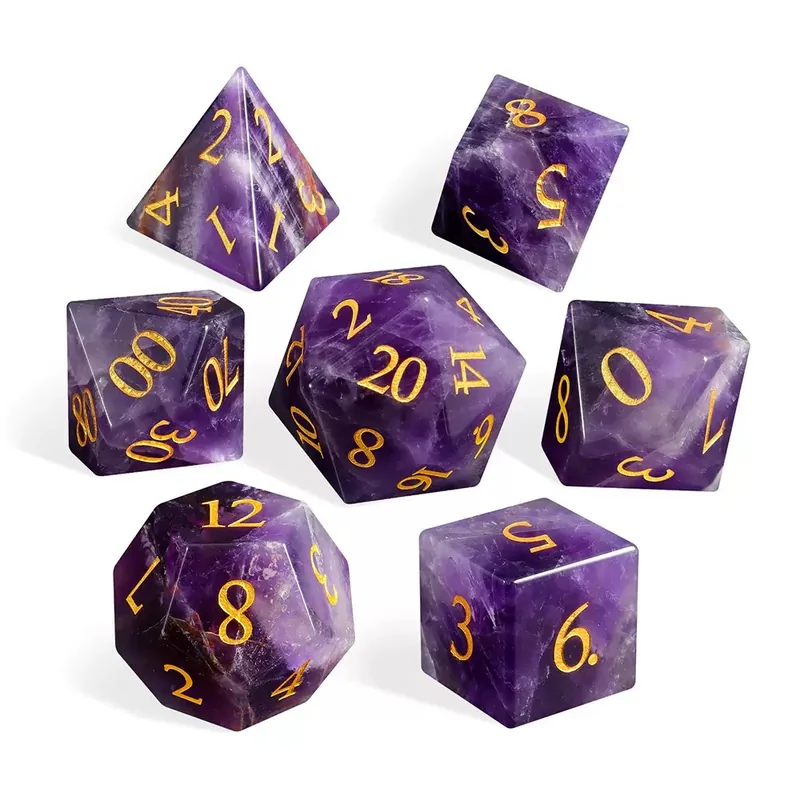
The phrase "gemstone dice" covers a surprising range of products — from genuine hand-cut natural stone to dyed minerals and even moulded glass. For a collector it affects value; for a brand putting its name on a product, selling a "gemstone" set that is actually glass is a real reputation risk. Here is how to tell the difference and what to ask before you order.
Three things sold as "gemstone dice"
- Natural stone — cut and ground from real mined stone such as amethyst, obsidian, tiger eye, or agate. Each die shows genuine, unrepeatable variation in colour and grain.
- Dyed or enhanced stone — real but lower-grade stone that is colour-treated. Common examples: pale howlite dyed to imitate turquoise, or dyed agate in unnaturally vivid colours.
- Synthetic or glass — man-made materials that look gem-like but are not natural stone: opalite (glass), "cat’s eye" fibre-optic glass, and dichroic glass. Attractive, but not gemstone.
How to tell natural from imitation
- Variation: natural stone is never perfectly uniform — expect banding, inclusions, and colour shifts between dice. Flawless, identical colour across a whole set is a red flag for glass or heavy dye.
- Temperature and weight: real stone feels cold and heavy; most glass and resin feel lighter and warm up faster in the hand.
- Colour realism: natural amethyst is soft-to-deep purple, not neon; turquoise has natural matrix veining. Unnaturally bright, candy colours usually mean dye or glass.
- Price: genuine natural-stone dice cost more than glass or resin because the stone is hand-worked and yields are lower. A "gemstone" price that looks too good usually is.
What to ask your manufacturer
- Is this natural stone, dyed stone, or synthetic/glass? Get it in writing.
- What is the exact material name? "Opalite" and "cat’s eye" are glass, not gemstones.
- Is the colour natural or treated? Some treatment is normal, but you should know so you can describe the product honestly.
- Can you show close-up photos of real production units, not stock renders?
Why authenticity matters for your brand
If you market a set as "natural gemstone" and it turns out to be dyed glass, you risk returns, bad reviews, and marketplace policy issues. Being clear about the material — whether natural, enhanced, or glass — protects your reputation and lets you price and position each line correctly. Many brands carry both: premium natural-stone sets and lower-cost glass sets, clearly labelled.
CuiShen cuts genuine natural-stone dice — obsidian, tiger eye, agate, amethyst, rose quartz, clear quartz, lapis lazuli, green aventurine, and turquoise — with honest material descriptions for every order. Tell us the look you want and we will tell you exactly what stone delivers it.
Frequently asked questions
Are gemstone dice made of real stone?
Genuine gemstone dice are cut from real mined stone and show natural variation. But some products sold as "gemstone dice" are actually dyed stone or glass (opalite, cat’s eye, dichroic glass). Always confirm the exact material with your supplier.
Is opalite a real gemstone?
No. Opalite is man-made glass, not a natural gemstone. It looks pretty and milky-iridescent, but it should be described as glass, not as a natural stone.
How can I tell if gemstone dice are dyed?
Unnaturally vivid, perfectly uniform colour is the main clue. Natural stone varies from die to die; heavy, candy-bright, identical colour usually means dye or glass. Ask your supplier whether the colour is natural or treated.
Related guides
Have a custom dice project?
Send us your spec sheet — we'll reply with a detailed quote within 24 hours.
Get a Free Quote