
How to Choose a Gemstone Dice Supplier: A Buyer’s Checklist
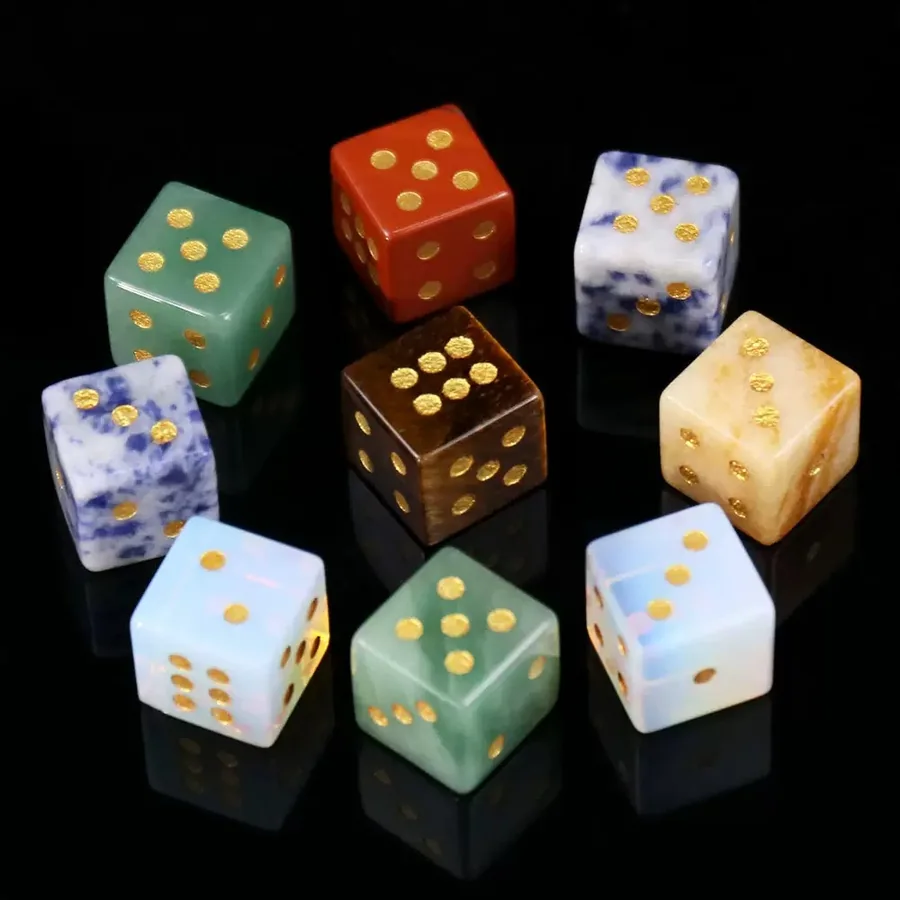
Most suppliers listing gemstone dice are trading companies rather than cutters, which is not disqualifying but changes what they can answer and how fast problems get fixed. Ask whether they cut in-house, and ask for photographs of raw blanks and the grinding line rather than finished product. Get the material named stone by stone in writing, since glass is regularly listed as crystal. Check the real MOQ and whether a single custom sample is available with the fee credited. Confirm engraving capability on your own artwork rather than on a catalogue example. Agree Incoterms explicitly — many Chinese factories including ours quote EXW, FOB or CIF but not DDP, which means import duty and customs clearance sit with the buyer.
Sourcing stone dice is not like sourcing resin. The material has yield loss, natural variation, and a genuine chance of being something other than what the listing says, and those three things shape every question worth asking.
Do they cut the stone, or resell it?
Start here, because the answer changes everything downstream. A cutter can tell you the yield on a particular stone, explain why one material costs more than another, and fix a problem at the grinding stage. A trading company is relaying your question to someone else and relaying the answer back, which adds days to every exchange and means nobody on the call has seen your material. Trading companies are not automatically a bad choice — a good one aggregates across factories and can be genuinely useful — but you should know which one you are talking to. Ask for photographs of raw blanks and of the grinding and polishing line, not of finished dice, which anyone can photograph.
Will they name the material in writing?
Glass is listed as crystal often enough that this needs to be explicit. Ask for the material stone by stone on the quotation and the purchase order, and ask directly whether any item in the range is glass — crackle glass and opalite are common, legitimate, and should be labelled. A supplier who answers plainly is telling you something useful about how the rest of the relationship will go. Vagueness at the quotation stage rarely improves after the deposit.
What does the MOQ actually mean?
- Is the minimum per stone, or across the whole order? Ten sets of one stone is a very different commitment from ten sets spread over five stones.
- Is there a separate minimum for custom engraving, or a tooling fee?
- Can you buy a single custom sample first, and is the sample fee credited against the first bulk order?
- Does the price break structure match the quantities you would realistically reorder at?
Test the engraving on your artwork
Every supplier has a catalogue example that engraves beautifully. What matters is your numerals, your symbols, your logo, on the stone you intend to use. Fine strokes that survive on obsidian can disappear on clear quartz once the ink fill goes in. Send the real artwork at the sampling stage and look at the physical result at arm’s length in ordinary room light, not under a photography lamp. If a supplier resists sampling your own artwork, that is information.
Ask what happens when a die chips
Stone is brittle and some proportion of any shipment will arrive with a chipped corner — that is the nature of the material, not a sign of a bad supplier. What separates suppliers is what they do about it. Ask what the accepted defect rate is, how it is handled, and how goods are packed for the freight leg specifically. A supplier who claims a zero defect rate on natural stone either does not inspect or is not being straight with you.
Settle Incoterms before you settle price
A cheap EXW price and a dear CIF price can be the same deal, and buyers compare them as if they are not. Get every quote on the same terms before comparing. Many Chinese factories, ours included, quote EXW, FOB or CIF but do not offer DDP — which means import duty, VAT and customs clearance in the destination country are the buyer’s responsibility. Know that before you build your landed cost, not after the goods arrive at the port. Ask for HS codes and full documentation up front so your broker is not improvising.
Check they will still be there for the reorder
If the first run sells, you will want a second that matches. Ask whether artwork and engraving files are retained, whether the same stone can be sourced again, and how close a match is realistic — with natural stone it will never be exact, and a supplier who promises otherwise is telling you they do not understand their own material. The honest answer is a range, and it is worth more than a confident one.
A short version
Ask who cuts the stone. Get materials named in writing. Sample your own artwork. Agree Incoterms and who carries the duty. Ask what happens when something chips. A supplier who answers all five plainly and without hedging is usually worth more than one who is five percent cheaper.
Frequently asked questions
How do I know if a gemstone dice supplier is a real factory?
Ask for photographs of raw stone blanks and the grinding and polishing line rather than finished dice. Ask yield questions — why one stone costs more than another — since a cutter answers immediately and a trader has to go and ask.
What MOQ should I expect for gemstone dice?
It varies widely. Ours is 10 sets across the whole stone range, with a single fully custom sample available first and the sample fee credited against the first bulk order. Always check whether a stated minimum is per stone or across the order.
Should I worry about glass being sold as crystal?
Yes, it is common enough to be worth guarding against. Have the material named stone by stone on the quotation and purchase order, and ask directly whether anything in the range is glass. Crackle glass and opalite are legitimate but should be labelled.
Who pays import duty on dice from China?
On EXW, FOB and CIF terms the buyer does. Many factories including ours do not offer DDP, so duty, VAT and customs clearance in the destination country sit with the buyer. Ask for HS codes and documentation up front.
Is a chipped die in a shipment normal?
Some proportion is normal with natural stone, which is brittle. What matters is the accepted defect rate, how it is handled, and how goods are packed for freight. A supplier claiming zero defects on stone is not inspecting or not being straight.
Can a reorder match the first production run?
Closely, but never exactly — natural stone varies between blocks. Ask whether artwork and engraving files are retained, and treat a promise of an exact match as a warning sign rather than a reassurance.
Related guides
Have a custom dice project?
Send us your spec sheet — we'll reply with a detailed quote within 24 hours.
Get a Free Quote