
Dice Trays, Bags and Storage: What Actually Protects a Set
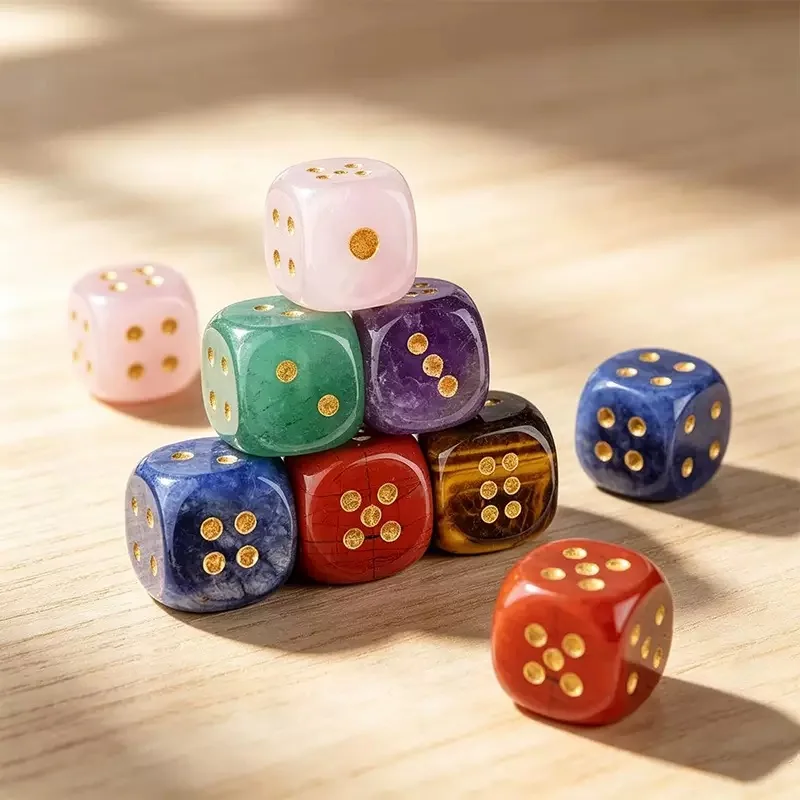
A rolling tray is the single accessory that matters for stone or metal dice. It stops the noise, protects the corners from chipping, and keeps your table unmarked — the three complaints that premium dice otherwise generate. Look for a soft base of felt, leather or cork with walls high enough to contain a roll. For storage, keep sets in a lined box or a padded pouch rather than loose in a bag where dice grind against each other and against keys. Clean with a soft dry cloth only: ultrasonic cleaners, solvents and prolonged soaking can loosen or lift the ink fill in engraved faces.
Almost every problem people report with stone and metal dice — the noise, the chipped corner, the scratched tabletop — has the same cheap solution. A tray is not an upsell dressed as advice; it is the difference between a set that survives years and one that looks tired in a season.
Why does a tray matter more for stone?
Plastic dice are light and forgiving, and they bounce off a hard table without consequence. Stone is heavier and harder, so it lands with force, and while the material itself is tough it is also brittle at the corners. Thrown onto bare wood, glass or a stone worktop, a stone die takes the whole impact on an edge. On a felt or leather base the same roll is absorbed, the dice settle faster, and the corners stay sharp. Metal dice have the same issue in reverse — they survive fine, but they dent the table.
What makes a good tray?
- A soft base — felt, leather, suede or cork. This is the part doing the work.
- Walls high enough to contain a roll, roughly 3cm or more, so dice do not hop out.
- A footprint large enough that dice actually tumble; a tiny tray makes rolls cramped and cocked.
- A rigid or well-structured base, so it does not fold under a heavy handful.
- For pool games, a larger tray than you think — thirty dice need room to spread.
Trays versus cups versus mats
A mat is the minimum: it protects the table and quietens the roll, but does nothing to stop dice skidding onto the floor. A tray adds containment, which is why it is the default for most players. A cup is the traditional option for backgammon and some dice games, where the roll is short and the shake is part of play — and a cup pairs with a lined board rather than replacing it. For a gemstone set the honest recommendation is a tray for general play, and a cup only if the game specifically calls for one.
How should you store a set?
The damage people do not notice happens in transit. Dice thrown loose into a bag grind against each other, against keys, and against whatever else is in there — the result is dulled polish and worn ink fill rather than a dramatic chip. A lined box with individual recesses is best for a seven-piece set, and a soft drawstring pouch is fine for a matched group of d6 that already live together. What matters is that the dice are not sharing space with hard objects.
Bags for pool games
Wargamers carrying thirty or more dice have a different problem: a single pouch of loose stone dice is exactly the grinding scenario above, just at scale. A padded or lined bag helps, and separating the dice into two or three smaller pouches reduces the pressure any one die takes at the bottom of the pile. It also makes counting out a pool faster, which is the practical reason most players end up doing it anyway.
Cleaning: what to avoid
A soft dry cloth handles almost everything. If dice are genuinely dirty, a barely damp cloth and immediate drying is safe. What to avoid is more important: ultrasonic cleaners, acetone and other solvents, abrasive polishes, and prolonged soaking. All of these can loosen or lift the ink fill sitting in the engraved faces, and once the fill goes the numbers become hard to read — which is the main thing that makes a set unusable rather than merely worn. Porous stones such as turquoise are the most sensitive to liquids.
What we can supply
We make the dice and the packaging rather than trays, so for a retail product we can supply lined boxes, tins, foam inserts and drawstring pouches with your branding — the storage half of this, in other words. If you are selling stone dice, pairing them with a pouch or a lined box is worth doing regardless of margin, because it is what stops a customer reporting scratched dice a month later. Tell us the set size and we will recommend an insert that holds the pieces separately.
Frequently asked questions
Do I need a dice tray for gemstone dice?
Strongly recommended. A tray stops the noise, protects the corners from chipping and keeps your table unmarked — the three complaints stone and metal dice otherwise generate.
What should I look for in a dice tray?
A soft base of felt, leather, suede or cork, walls of roughly 3cm or more to contain a roll, and a footprint large enough for dice to tumble properly. Pool players need a noticeably larger tray.
How should I store dice so they do not get damaged?
In a lined box with recesses, or a padded pouch. The usual damage is not dramatic chipping but dulled polish and worn ink fill from dice grinding loose in a bag against keys and each other.
How do you clean gemstone dice?
A soft dry cloth, or a barely damp cloth with immediate drying. Avoid ultrasonic cleaners, solvents, abrasive polishes and soaking — they can lift the ink fill from the engraved faces, and porous stones such as turquoise are especially sensitive.
Is a mat as good as a tray?
A mat protects the table and quietens the roll but does not stop dice skidding off. A tray adds containment, which is why most players use one.
Do you make dice trays?
We make the dice and the packaging rather than trays — lined boxes, tins, foam inserts and branded drawstring pouches. Pairing a stone set with a pouch or lined box is worth doing, since it prevents most in-transit wear.
Related guides
Have a custom dice project?
Send us your spec sheet — we'll reply with a detailed quote within 24 hours.
Get a Free Quote