
Resin vs Acrylic Dice: Cost, Look, Durability, and Which to Choose
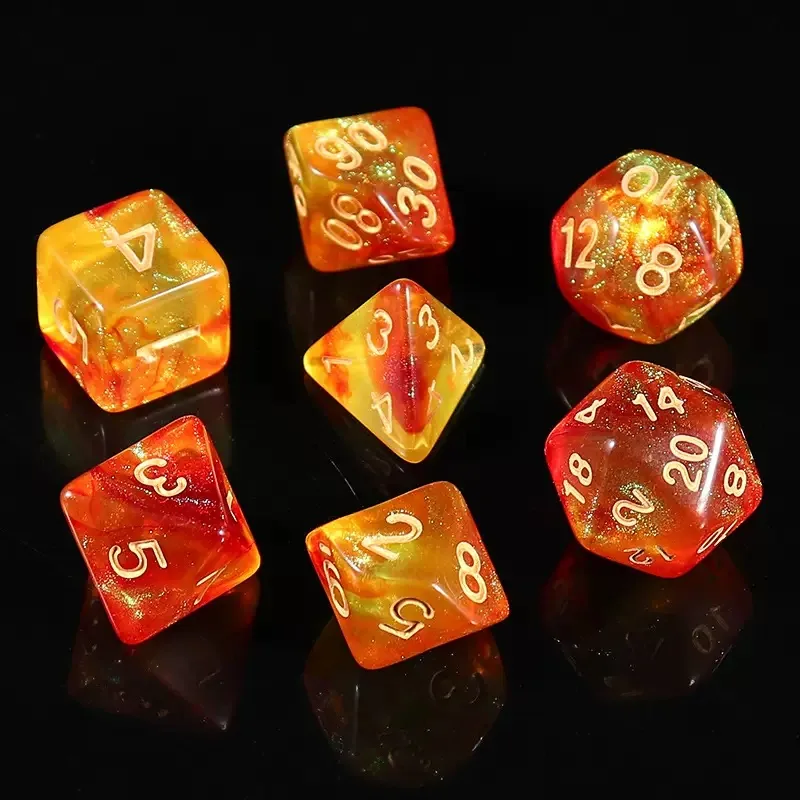
Resin and acrylic are the two most common plastics for custom dice, and buyers often use the words interchangeably. They are not the same. The difference in how each is made drives everything downstream — cost, MOQ, finish, and the kind of designs each can achieve. Here is a straightforward comparison to help you pick the right one for your line.
How they are made (the key difference)
Acrylic dice are typically injection-moulded or cut from cast acrylic rod — a fast, highly repeatable process that produces uniform sets at low cost and high volume. Resin dice are poured by hand into moulds and cured, which allows swirls, glitter, inclusions, and sharp-edge (faceted) shapes, but takes more labour and yields more variation between sets. In short: acrylic is uniform and economical; resin is expressive and collector-grade.
Cost and MOQ
- Acrylic — lower unit cost, best for large, colour-consistent runs and giveaways. MOQ from around 200 sets.
- Resin — higher unit cost due to hand-pouring and finishing, best for premium and collector lines. MOQ from around 200 sets, with sharp-edge and inclusion work adding to the price.
Look and finish
Acrylic gives clean, consistent colour and translucency — great for bright, uniform sets where every unit should look identical. Resin is where the eye-catching effects live: galaxy swirls, suspended glitter, real inclusions (flowers, flakes, figures), colour splits, and sharp faceted edges. If you want each set to feel one-of-a-kind and collector-grade, resin is the material.
Durability
Both are more durable than natural stone and will not chip like gemstone dice. Acrylic is hard and scratch-resistant; resin is durable too, though sharp-edge resin corners can show wear faster than rounded ones with heavy use. For gaming that sees constant rolling, rounded acrylic or resin holds up best; for display and collector appeal, sharp-edge resin wins on looks.
Which should you choose?
- Choose acrylic for affordable, colour-consistent, high-volume runs, gaming lines, and giveaways.
- Choose resin for premium, collector, and limited-edition sets where unique effects and sharp edges justify a higher price.
- Many brands offer both — an affordable acrylic tier and a premium resin tier — to cover more of the market.
Both materials are fully customisable with your colours, number font, logo engraving, ink, and branded packaging. Tell us the look and price point you are targeting and we will recommend the right material and send a quote within 24 hours.
Frequently asked questions
Are resin and acrylic dice the same thing?
No. Acrylic dice are moulded or cut for uniform, low-cost, high-volume sets. Resin dice are hand-poured, allowing swirls, glitter, inclusions, and sharp-edge shapes with more variation between sets.
Which is cheaper, resin or acrylic dice?
Acrylic is usually cheaper per unit for large, consistent runs. Resin costs more because of hand-pouring and finishing, especially for sharp-edge and inclusion designs.
Which is more durable?
Both are far more durable than natural gemstone and resist chipping. Acrylic is hard and scratch-resistant; rounded resin is very durable too, while sharp-edge resin corners can show wear faster under heavy rolling.
Related guides
Have a custom dice project?
Send us your spec sheet — we'll reply with a detailed quote within 24 hours.
Get a Free Quote