
AQL Inspection: How to Check an Order Before You Pay the Balance
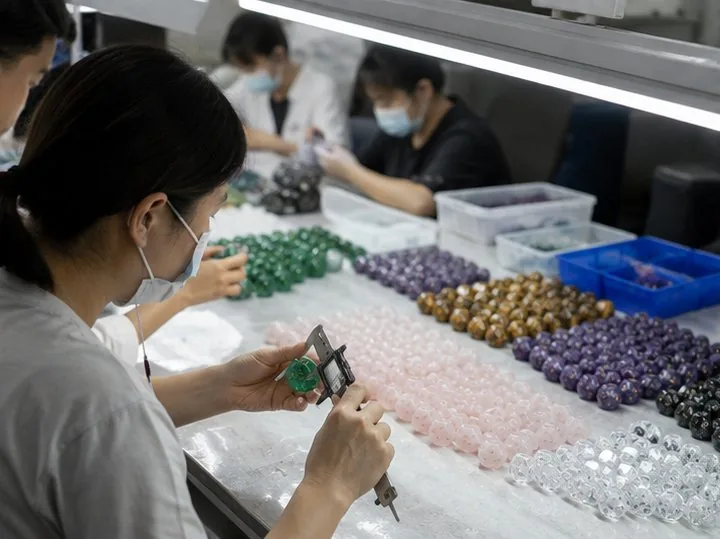
AQL is a sampling standard: an inspector checks a statistically chosen sample rather than every unit, counts defects by severity, and the order passes or fails against agreed limits. The common setup is General Inspection Level II with AQL 0 for critical defects, 2.5 for major and 4.0 for minor. Book the pre-shipment inspection when production is at least 80 percent complete and packed, which is before you pay the balance — that timing is the entire point, because a report in hand while the supplier is still waiting for money is the only real leverage you have. A typical inspection costs a few hundred US dollars per man-day.
Once the balance is paid and the container has sailed, your options narrow to asking nicely. An inspection is what moves the discovery of a problem to a point where it can still be fixed cheaply, by the party who caused it. It is the cheapest insurance in importing and the step small buyers skip most often.
What does AQL actually mean?
AQL stands for Acceptable Quality Limit. It comes from an international sampling standard (ISO 2859-1, known in the US as ANSI/ASQ Z1.4) and it answers a practical question: how many units should we check, and how many faults are we willing to accept before rejecting the lot? Nobody inspects 10,000 bracelets one by one. Instead the lot size determines a sample size, and the AQL numbers determine how many defects in that sample cause a fail. It is statistics, not a promise of perfection — which is why understanding the numbers matters.
Critical, major and minor defects
- Critical — unsafe or illegal: a sharp edge that can cut, a choking hazard, a missing required label. The normal AQL is 0; any critical defect fails the lot.
- Major — would cause a customer to reject or return the item: wrong stone, broken clasp, chipped dice face, engraving filled unevenly. AQL 2.5 is standard.
- Minor — a deviation a customer would probably accept: a slight colour variation within natural range, a small packaging blemish. AQL 4.0 is standard.
What do the numbers mean in practice?
Take an order of 3,000 bracelets at General Inspection Level II. The standard gives a sample size — for that lot, around 125 pieces. At AQL 2.5 for major defects, the table sets an accept/reject point: find up to a certain number of major defects in those 125 and the lot passes; one more and it fails. The important consequence is that passing does not mean zero defects; it means the defect rate is probably within the level you agreed to tolerate. If your product genuinely cannot tolerate that rate, tighten the AQL or raise the inspection level — both increase sample size and cost.
The four inspection types
- Pre-production — checks materials and components before the line starts. Worth it for a first order with a new supplier.
- During production (DUPRO) — typically at 20 to 30 percent output, so a systemic fault is caught while there is still time to correct it.
- Pre-shipment (PSI) — the standard one, at 80 percent or more produced and packed. This is the report you pay the balance against.
- Container loading — supervises what physically goes into the container and how it is stowed.
When should you book it?
Pre-shipment inspection should happen when production is at least 80 percent finished and packed, and before the balance payment. That sequence is not a detail, it is the whole mechanism: a supplier who has not yet been paid has a strong reason to rework. A report that arrives after payment is a document; a report that arrives before payment is leverage. Tell the supplier at order time that a pre-shipment inspection will take place — a good factory has no objection, and saying so up front also quietly raises the care taken on the line.
What does it cost?
Third-party inspection agencies — SGS, Bureau Veritas, Intertek, QIMA and others — typically charge a few hundred US dollars per man-day, and most small-to-medium orders need a single man-day. Against an order worth several thousand dollars, and against the cost of receiving unsaleable goods on the other side of the world, that is a rounding error. For very small first orders, a reasonable middle path is to ask the supplier for detailed photos and video of finished goods and packing, and reserve paid inspection for when order value justifies it.
What should you specify before the inspection?
An inspector can only check against something written down. Supply a clear specification: exact materials and stone types, dimensions with tolerances, colour references, engraving depth or finish requirements, packaging and labelling, and an approved golden sample the inspector can compare against. The single most common cause of a useless inspection is a vague brief — without a golden sample and written tolerances, the inspector is left judging by opinion, and so is the resulting dispute.
What if the inspection fails?
A failed report is not a disaster, it is the system working. The usual outcomes are rework and re-inspection at the supplier’s cost, sorting to remove defective units, a price concession if you accept the goods as-is, or in serious cases cancellation. Agree in advance, in writing, who pays for re-inspection after a fail — it is a small clause that prevents a long argument. Do not release the balance until the re-inspection passes.
How this fits with payment
The clean sequence is: deposit paid, production runs, pre-shipment inspection at 80 percent, report reviewed, balance released, documents issued, goods ship. Every part of that order exists for a reason, and the inspection sits deliberately between production and payment. Buyers who reverse those two steps lose the only practical remedy they had.
Frequently asked questions
What is an AQL inspection?
A check of a statistically determined sample from an order rather than every unit, against agreed limits for critical, major and minor defects. It comes from ISO 2859-1 (ANSI/ASQ Z1.4) and produces a pass or fail for the lot.
What AQL levels should I use?
The common setup is General Inspection Level II with AQL 0 for critical defects, 2.5 for major and 4.0 for minor. Tighten the numbers if your product cannot tolerate that defect rate — it increases sample size and cost.
When should a pre-shipment inspection happen?
When production is at least 80 percent complete and packed, and crucially before you pay the balance. A report in hand while the supplier is still awaiting payment is the only real leverage you have.
How much does a third-party inspection cost?
Typically a few hundred US dollars per man-day, and most small-to-medium orders need one man-day — trivial against the cost of receiving unsaleable goods abroad.
Does passing an AQL inspection mean there are no defects?
No. It means the defect rate is probably within the level you agreed to accept. AQL is a sampling standard, not a guarantee of perfection.
What happens if the inspection fails?
Usually rework and re-inspection at the supplier’s cost, sorting out defective units, a price concession, or cancellation in serious cases. Agree in writing beforehand who pays for re-inspection.
Related guides
Have a custom dice project?
Send us your spec sheet — we'll reply with a detailed quote within 24 hours.
Get a Free Quote