
How to Tell a Real Factory from a Trading Company
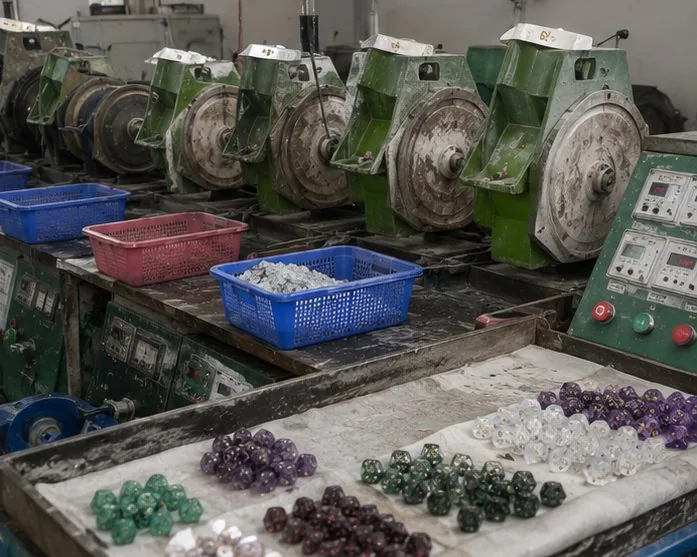
A trading company buys from factories and resells at a markup, which adds 20 to 40 percent to your price and a layer between you and production. The fastest checks are: ask for a live unedited video walk through the production floor showing your specific process, ask a detailed process question only a maker could answer, check that the business licence scope says manufacturing rather than trade, and see whether the product range is suspiciously broad. A real factory has deep range in one material and shallow range elsewhere; a trader sells everything. None of these checks cost anything, and doing them before you pay a deposit is the highest-value hour in sourcing.
Search any product on a B2B marketplace and most sellers will call themselves a manufacturer. Many are not. That is not always a problem — a good trading company can be useful if you are buying across many categories — but you should know which you are dealing with, because it changes your price, your lead time, and how much you can customise.
Why does it matter?
A trader adds a margin, typically 20 to 40 percent. They also sit between you and the people who actually make the product, which slows every technical question and makes real customisation harder — if the factory says a tolerance is not achievable, that answer reaches you filtered and late. When something goes wrong mid-production, a trader can only relay messages. Direct factory contact means decisions get made on the floor the same day.
Ask for a live video walk of the floor
This is the single most effective test. Ask for an unedited live video call, not a pre-recorded clip, and ask them to walk from raw material to packing while showing the specific process your product needs — cutting, grinding, engraving, whatever applies. A factory can do this on request. A trader will offer a polished video file, reschedule repeatedly, or show a floor that does not match the product they are selling you.
Ask a question only a maker can answer
Pick something specific to the process. For gemstone dice, for example: which stones chip most during grinding and how do you compensate, what is the actual engraving depth in millimetres, how do you handle natural fractures in the raw block, what is your scrap rate on a hard stone. A production manager answers immediately and with numbers, often adding a caveat you did not ask for. A trader gives a vague reassurance or says they will check and come back tomorrow.
Check the business licence
- Ask for a copy of the Chinese business licence and check the scope of business — manufacturing (生产) rather than only trade (贸易).
- Compare the registered address with the factory address they gave you.
- Check the registered capital and founding year against what they claim.
- Cross-check the company name on a Chinese company registry lookup.
Look at the range they sell
This is a quiet but reliable tell. A real factory has enormous depth in what it makes and nothing in unrelated categories — a gemstone workshop offers dozens of stones and shapes but will not also sell electronics and textiles. A catalogue that spans many unrelated materials almost always means sourcing from multiple suppliers. Ask directly: which of these do you make in house, and which do you buy in. An honest factory will tell you plainly, because most factories do outsource something such as printed packaging.
Watch the sample lead time
A factory making an in-house product can usually sample quickly, because the material and the machines are on site. If a simple sample consistently takes weeks with no clear explanation, the supplier may be ordering it from someone else. Ask what specifically drives the sample lead time — a maker will name the step, such as waiting for a stone block or for an engraving fixture.
The warning signs
- Refuses a live video call but sends polished photos and videos.
- Cannot answer process questions without checking first, every time.
- Business licence scope is trade only, or they avoid sending it.
- Asks for payment to a personal account rather than the company account.
- Sells a very wide range of unrelated product categories.
Frequently asked questions
How can I tell if a Chinese supplier is really a factory?
Ask for a live unedited video walk of the production floor showing your specific process, ask a detailed process question only a maker could answer, and check that the business licence scope says manufacturing rather than trade only.
Is it bad to buy from a trading company?
Not always. A trader can be useful if you buy across many categories or need very small quantities. But you pay a markup of roughly 20 to 40 percent and lose direct access to the people making your product.
What should I check on a Chinese business licence?
The scope of business (manufacturing versus trade), the registered address against the factory address, the registered capital, and the founding year. Cross-check the name on a company registry.
Why does a factory have a narrow product range?
Because machines and skills are material-specific. A gemstone workshop can offer dozens of stones and shapes but has no way to make unrelated goods. A very broad catalogue usually means reselling.
Is CuiShen a factory or a trading company?
We are a factory in Dongguan, China, established in 2009, cutting, polishing and engraving natural gemstone in house. We are happy to do a live video walk of the floor before you order.
Related guides
Have a custom dice project?
Send us your spec sheet — we'll reply with a detailed quote within 24 hours.
Get a Free Quote